
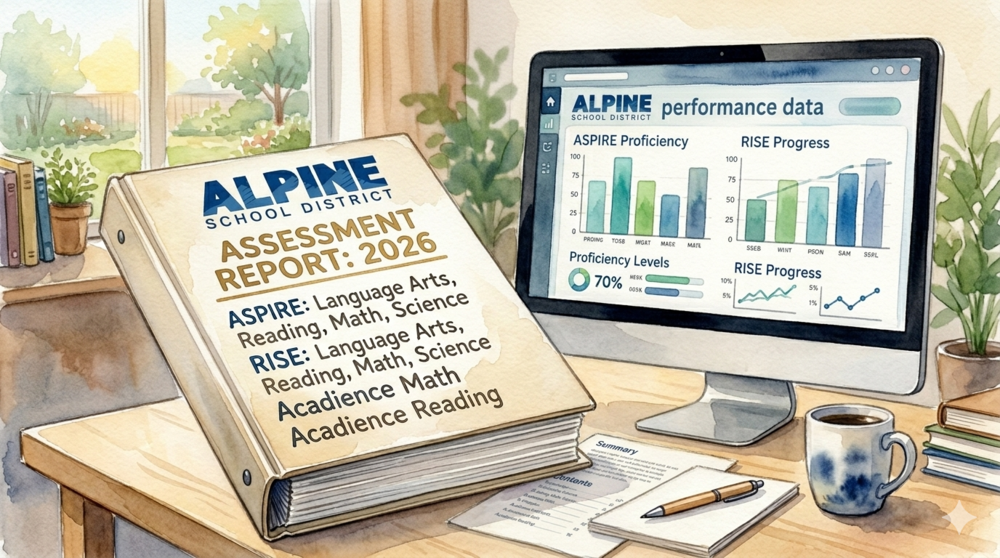
Each Spring, thousands of students take state tests in all of our 90 schools. Parents can now view the results of those assessments in Skyward.
What Parents Need to Know about the Assessments
Results are available for these state-required assessments:
ASPIRE: Language Arts, Reading, Math, Science; Grades 9–10
RISE: Language Arts, Reading, Math, Science; Grades 3–18
Acadience Math: Grades K–3
Acadience Reading: Grades K–6
WIDA: English Language Proficiency; Grades K-12
Parents can access their students’ scores by logging into Skyward and clicking on the “Portfolio” tab, following this guide.
The reports are important for educators and parents, according to Jason Crowton, Director of Results and Achievement for Alpine School District.
“Compiling and analyzing assessment data helps educators identify patterns, strengths, and areas for improvement at the student, classroom, school, and district levels,” he said.
The Utah State Board of Education requires school districts to notify parents when the reports are available.
“When parents understand assessment results, they are better equipped to partner with teachers and students in continuous improvement,” said Crowton.
Compiling and Reporting the Data
Students began taking year-end assessments in mid-March and concluded mid-May. With 85,000 students taking a variety of tests, the volume of assessment data is immense.
State officials delivered the official scores to Alpine School District in late May, initiating the rapid data-entry process. Crowton and his Results and Achievement team then securely downloaded the files and completed quality assurance checks to ensure the reports are associated with the correct students.
“Our team knows that these aren't just data points—they are individual reflections of student learning, so we handle them with extreme care before they become visible to parents,” said Crowton.
The reports have been uploaded into Skyward and attached to each student's portfolio, making them accessible to parents and guardians through Family Access.
“Each report includes the student's assessment results as well as information provided by each assessment vendor to help families understand what the scores mean and how they should be interpreted,” said Crowton.
What Assessment Data Tells Parents
Statewide assessments provide a “standardized source of information about student proficiency and, when combined with locally collected data, help evaluate programs and guide instructional planning,” according to the state board of education.
“When parents have access to assessment information, they can engage in informed conversations with teachers and students, celebrate accomplishments, and help support future learning goals,” said Crowton.
Crowton is quick to point out that state test data isn’t a perfect or complete picture.
“Families should view assessment results as one piece of evidence within a larger picture of student learning, growth, and readiness for life,” he said.